Not all data exposures make headlines. All of them cause damage.
Three Types of Exposure.
One Scanning Platform.
Data leaks aren't just stolen databases. A misconfigured API response, a verbose error page, an exposed admin panel—each one is an invitation. DataShielder monitors for all three categories of exposure, continuously.
Avg. cost of a PII breach in 2024
Days avg. to identify a breach
Involve data stored in the cloud
Personally Identifiable Information
The data your customers trusted you with. The data regulators will fine you for. PII leaks aren't always dramatic database breaches—they're often quiet: an API returning too many fields, a debug endpoint left in production, an error message with a stack trace containing user records.

Names & Contact Info
Full names, email addresses, phone numbers, and physical addresses exposed in API responses or error pages.
Financial Data
Credit card numbers, bank account details, and payment tokens leaking through verbose responses or insecure forms.
Identity Documents
SSNs, passport numbers, driver's license IDs, and government identifiers in application outputs or unprotected file stores.
Health & Sensitive Records
Medical records, biometric data, and other special category data subject to HIPAA, GDPR Article 9, and similar regulations.
The cost is personal. PII breaches trigger mandatory disclosure laws in 50 states, GDPR fines up to 4% of global revenue, and class-action lawsuits that outlast the executives who caused them. Beyond the legal exposure: customers don't come back.
Commercially Sensitive Data
Not every data leak is about people. Some leaks expose your business strategy, pricing models, client relationships, and competitive advantage. These don't trigger breach notification laws—which means they can bleed value for months before anyone notices.

Pricing & Revenue Data
Internal pricing tiers, discount structures, margin data, and revenue figures leaking through API endpoints, JavaScript bundles, or misconfigured dashboards. A competitor knowing your pricing model is an existential problem.
Client & Partner Information
Client lists, partner contracts, account details, and relationship data exposed in authenticated areas with broken access controls or leaked through referrer headers and third-party scripts.
Legal & Strategic Documents
Internal memos, M&A documents, legal correspondence, and strategic plans accessible through misconfigured file storage, exposed document management systems, or predictable URLs.
Intellectual Property
Proprietary algorithms exposed in client-side code, trade secrets in debug outputs, and product roadmaps in exposed project management tools. Once it's out, there's no patent that protects you.
Why This Goes Undetected
Commercial data leaks don't set off alarms. There's no regulatory requirement to report them. No monitoring tool flags "your competitor just downloaded your entire pricing structure."
The exposure often lives in places nobody thinks to check: overly permissive API responses, JavaScript source maps shipped to production, internal dashboards on guessable subdomains, or SaaS tools configured with public-by-default sharing.
The silent risk: Competitors, investors, and bad actors all benefit from commercial data leaks. The difference is you'll never get a notification that it happened.
Infrastructure & System Data
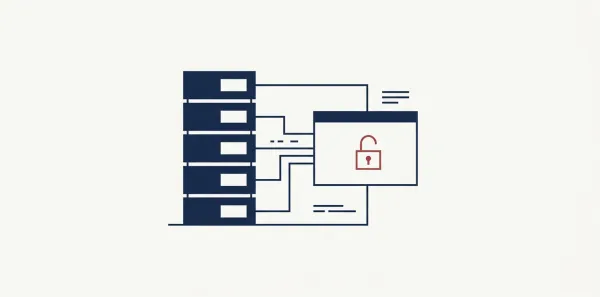
The keys to the kingdom. Exposed admin panels, unprotected orchestration dashboards, leaked credentials, and verbose server headers don't just leak data—they hand attackers the controls to your entire environment. This is how breaches escalate from "we found an open port" to "they owned everything."
Admin Panels & Dashboards
Kubernetes dashboards, Grafana instances, phpMyAdmin, Jenkins consoles, and cloud management interfaces exposed to the internet with default credentials or no authentication at all.
Secrets & Credentials
API keys, database connection strings, AWS credentials, and service tokens embedded in client-side code, exposed .env files, or publicly accessible configuration endpoints.
Server & Stack Information
Verbose HTTP headers, detailed error pages, and server banners that reveal exact software versions, framework details, and OS information—giving attackers a precise shopping list of known CVEs.
Database Interfaces
Exposed Redis instances, Elasticsearch clusters, MongoDB consoles, and database admin tools reachable from the public internet. Often with no authentication or default passwords.
Internal Network Mapping
DNS records exposing internal hostnames, SSRF vulnerabilities revealing private IP ranges, and misconfigured reverse proxies leaking internal network topology.
CI/CD & DevOps Tools
Exposed Jenkins, GitLab, ArgoCD, and build system interfaces that grant write access to production deployments. One exposed pipeline is a supply chain compromise waiting to happen.
This is how small breaches become catastrophic ones. An exposed Kubernetes dashboard doesn't just leak data—it gives an attacker the ability to deploy code, read secrets, pivot to internal services, and compromise your entire infrastructure. Infrastructure exposure is the difference between "they read some data" and "they owned our environment."
Exposures Don't Exist in Isolation
Real attacks chain exposures together. An exposed admin panel leads to a database. The database contains PII. The PII triggers a breach notification. DataShielder maps the full picture.
Debug Endpoint → Customer Database
Verbose error page reveals database connection string
Connection string grants read access to production database
Database contains 2.3M customer records with PII
Source Maps → Pricing Exfiltration
JavaScript source maps deployed to production
Source reveals hidden admin API with pricing engine logic
Competitor reverse-engineers your entire pricing model
K8s Dashboard → Full Compromise
Kubernetes dashboard exposed on subdomain with no auth
Attacker deploys pod with host network access
Lateral movement to every service, secret, and database
What DataShielder Detects
Continuous scanning across all three exposure categories. No agents to install. No source code required.
PII Exposure
- API responses leaking user records
- Exposed personal data in error messages
- Unprotected file uploads containing PII
- Form data transmitted without encryption
- Search endpoints exposing user directories
- Verbose logs accessible via web
Commercial Data
- Pricing data in client-side JavaScript
- Source maps exposing business logic
- Internal dashboards on public subdomains
- Broken access controls on sensitive endpoints
- Third-party scripts leaking referrer data
- Publicly indexed internal documents
Infrastructure
- Exposed admin panels and dashboards
- Leaked API keys and credentials
- Unprotected database interfaces
- Verbose server headers and banners
- Exposed CI/CD and DevOps tools
- Misconfigured cloud storage buckets
"Your customers' data is leaking.
Do you know where?"
"Competitors don't need to hack you.
Your API told them everything."
"An open K8s dashboard isn't a misconfiguration.
It's a full compromise."
You Can't Fix
What You Can't See
PII, commercial secrets, infrastructure controls—DataShielder scans for all three, continuously, from the outside in. No source code. No agents. No engineering tickets. Just visibility.